

A Psychiatrist's Perspective
Autism Spectrum Disorder (ASD) is a condition I encounter frequently in my practice. It affects how a person communicates, interacts with others, and experiences the world. Autism is a lifelong difference in brain development. it is not a disease, and it is not caused by parenting, vaccines, or spiritual factors. Every individual with autism is unique, which is why we refer to it as a spectrum. Some people may need significant support in daily life, while others function independently and even excel in certain areas.
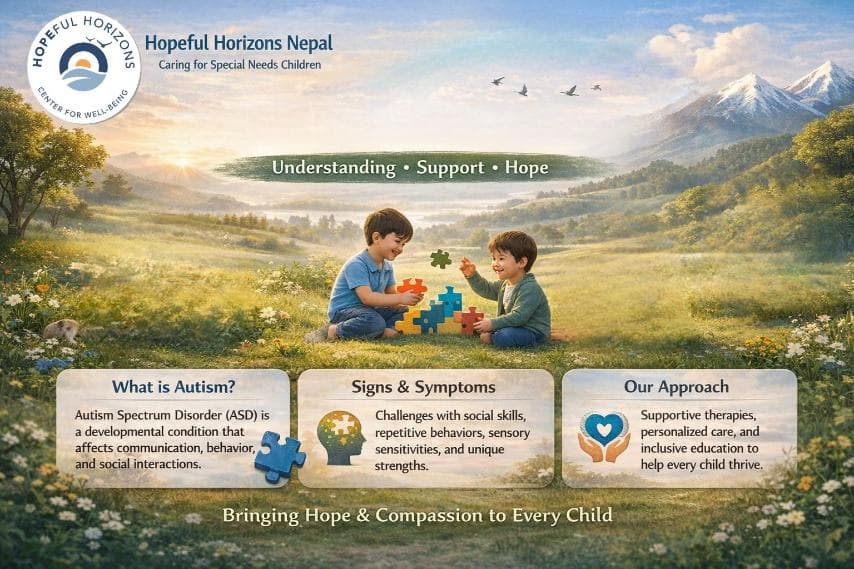
Common features of Autism
In my experience, some common features of autism include:
• Differences in social communication and understanding social cues
• Challenges with verbal or non-verbal communication
• Repetitive behaviors or movements, and deep, focused interests
• A strong preference for routines and predictability
• Sensory sensitivities, such as difficulty tolerating certain sounds, lights, textures, or crowded environments
• Poor peers play
• Poor eye contact/ no response on name calling
• Limited use of facial expressions
These traits are usually present from early childhood, though in some individuals. Especially those with milder traits. Autism may be recognized only later in life. Understanding these patterns early can make a big difference in providing timely support and reducing stress for both the individual and their family.
Autism in Nepal: Stigma and misconceptions
In Nepal, stigma and misconceptions around autism are still widespread. Cultural beliefs and limited public awareness can lead to blame, shame, or exclusion, and families often hesitate to seek professional help. This delay can prevent children and adults from accessing therapies, educational accommodations, and support that can improve their quality of life.
Support and Strengths
As a psychiatrist, I emphasize that autism is not a limitation. it is a different way of experiencing and interacting with the world. With accurate information, understanding, and appropriate support, individuals with autism can thrive. Families, schools, and communities play an essential role by fostering acceptance, reducing stigma, and helping autistic individuals develop their strengths.
Taking the first step
If you notice differences in your child or yourself that align with autism, seeking professional guidance is the first step toward clarity, understanding, and support. Early intervention, combined with empathy and patience, can empower individuals with autism to live fulfilling, meaningful lives.
Dr. Ghanashyam Rai
Consultant Psychiatrist