

A Hand Away from Hope: Why It Is Always Okay to Ask for Help
Working as a nurse in a mental health clinic, I have had the privilege of meeting people from all walks of life—individuals carrying silent struggles, overwhelming emotional pain, and moments of deep hopelessness. Time and again, I have witnessed how a simple conversation, a listening ear, or timely support can make the difference between despair and recovery. These experiences led me to reflect on how often people suffer alone, believing there is no one to turn to.
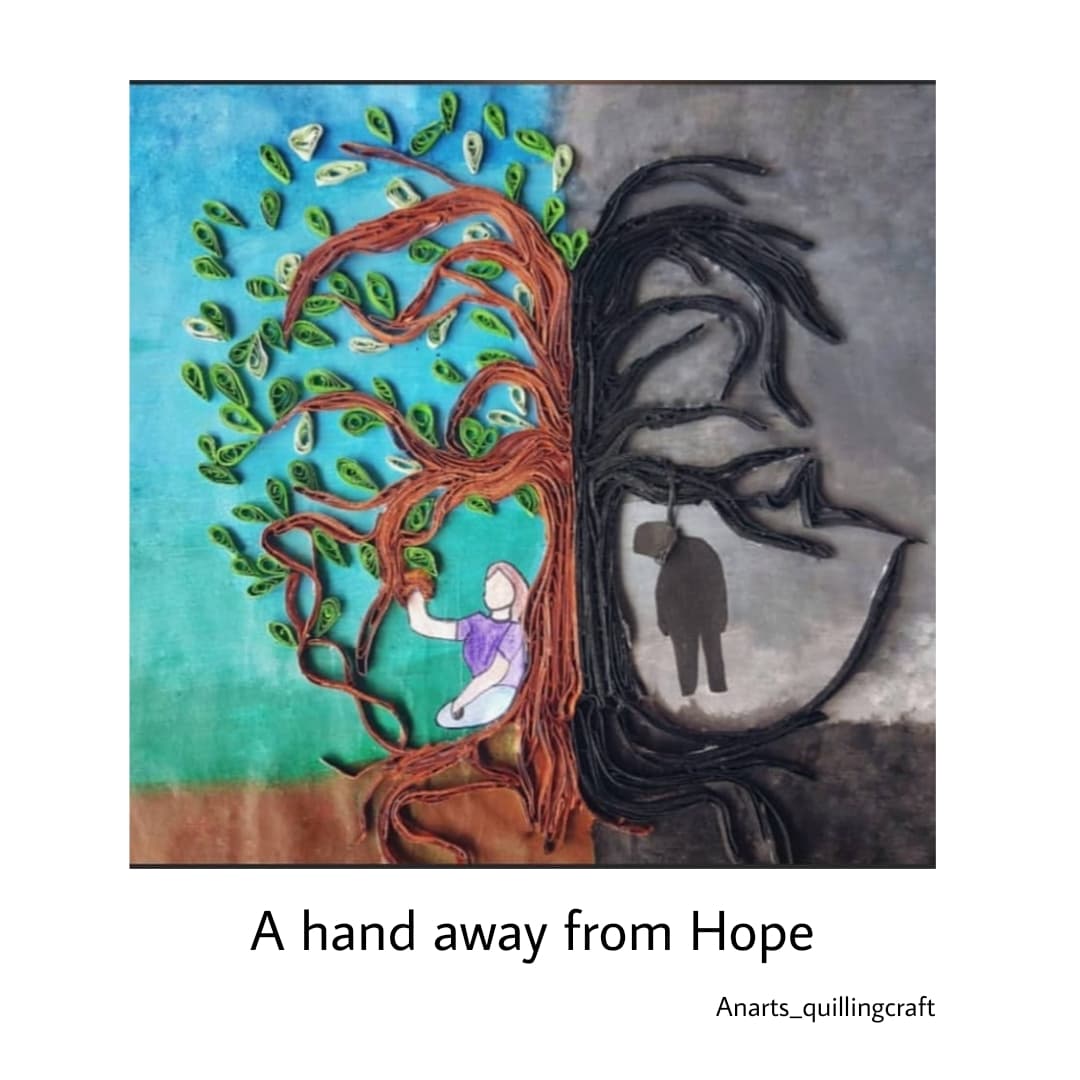
Inspired by these encounters, I created a picture titled “A Hand Away from Hope” to illustrate a message I have learned through my work: help is often much closer than we realize, and reaching out is a sign of courage, not weakness.
When you are going through a difficult time, it can feel as if you are trapped in a dark room with no way out. But “A Hand Away from Hope” reminds us that even in our darkest moments, support is often much closer than it seems.
Through the imagery of a single tree representing the human mind, this artwork delivers a deeply important message: suicide is never the answer, and it is always okay to reach out for help.
The Dark Side: The Illusion of Isolation
The right side of the artwork is painted in deep shades of black and grey, where bare branches twist and form the outline of a human face turned away from hope. Inside this darkness hangs a lonely silhouette, symbolizing emotional pain, depression, and isolation. This side reflects how mental illness can distort reality—making a person feel completely disconnected from the world and convinced that no one understands their pain. Yet, hidden within these dark branches is a powerful symbol: one branch forms the shape of a heartbeat line. This serves as a quiet reminder that even in moments of despair, your heart is still beating. Life is still present within you, and your story is not over.
The Bright Side: The Natural Blueprint to Heal
In contrast, the left side of the artwork is filled with light—blue skies, green grass, and blooming leaves—representing hope, recovery, and the possibility of change. The main branch twists upward like a DNA strand, symbolizing the many factors that shape our lives, including our experiences, relationships, and inner strengths. Together, these elements remind us that healing is possible, especially when we allow ourselves to seek support and connection.
Beneath this canopy, a figure is shown reaching upward toward the branches. This gesture represents the courage it takes to ask for help. Whether turning to a trusted friend, a family member, or a healthcare professional, reaching out can be the first step toward finding hope and support. The artwork reminds us that we do not have to face life's struggles alone, and that help is often closer than we think.
The Main Takeaway
The darkness and light are not separate worlds—they are connected to the same tree trunk. This symbolizes an important truth: hope, safety, and support are never far away, even when they feel unreachable. If you are struggling, remember what this artwork teaches us: your heart is still beating, life is still within you, and help is always just a hand away.

Anusharna Maharjan
Head Nurse
-Hopeful Horizons Nepal